
Retinol is one of the most researched skincare ingredients for smoother-looking texture, uneven tone, and visible signs of aging, but it has to be introduced slowly.
Retinol – Benefits, Side Effects, and How to Start Slowly
Retinol can be helpful, but it is also one of the ingredients beginners misuse the most. People often start too often, use too much, combine it with exfoliating acids, or skip moisturizer and sunscreen. That is when dryness, peeling, burning, and irritation can happen.
This guide explains what this ingredient does, how to start safely, what side effects to expect, what to avoid, and how to protect your skin barrier while using it.
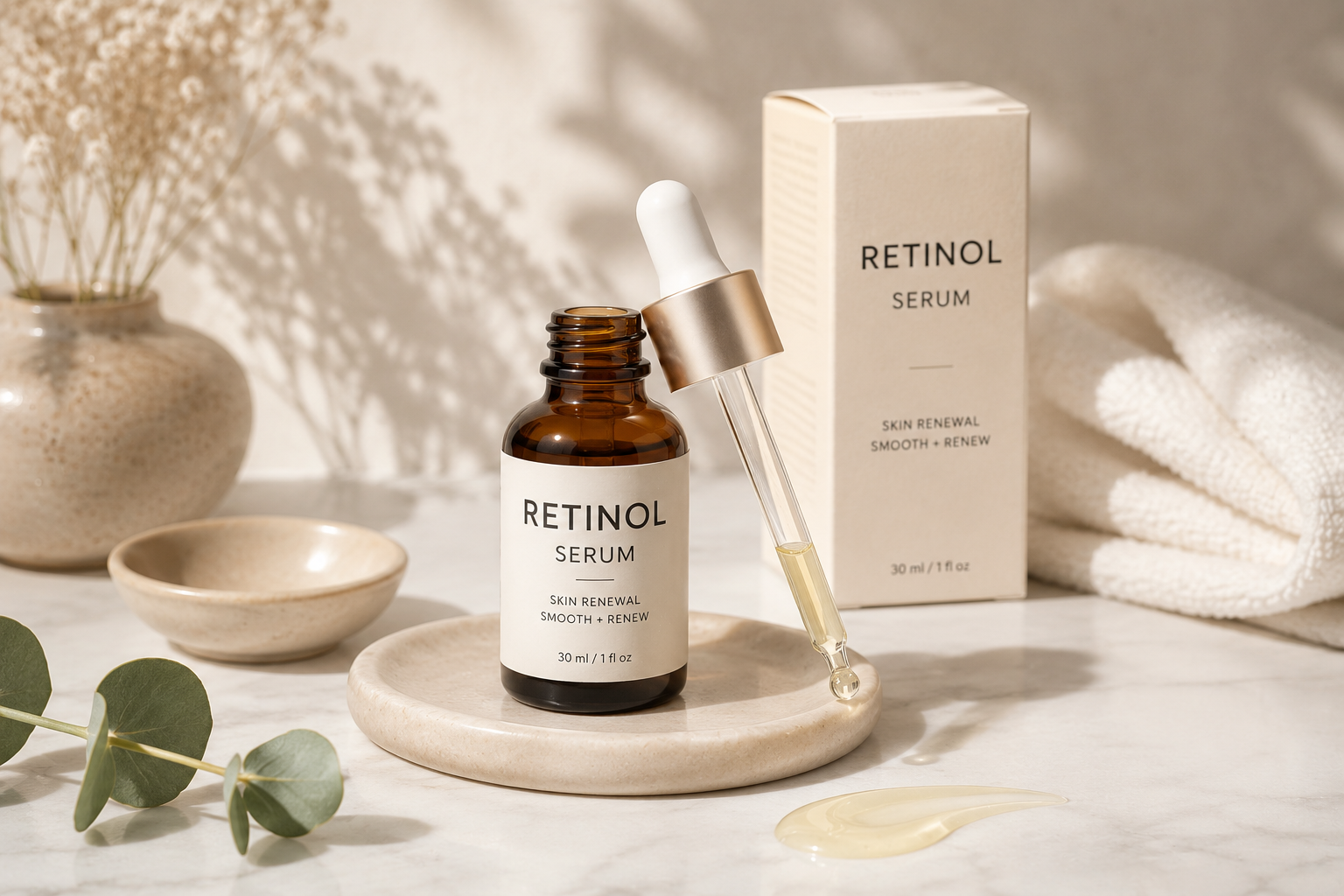
What Is Retinol?
Retinol is a vitamin A derivative used in skincare to support smoother-looking skin, improve the appearance of uneven texture, and help with visible signs of aging over time. It belongs to the broader retinoid family, but it is not the same as prescription-strength tretinoin.
In simple terms, this ingredient encourages skin renewal. That is why it can be helpful for dullness, rough texture, fine lines, and some types of clogged pores. It is not an instant glow product. It works gradually, and the routine around it matters.
Beginners should think of this as a long-term ingredient. You do not need to use it every night right away. You do not need to pair it with every active you own. A slow routine usually gives better results because your skin has time to adjust.
The most important rule is simple: do not start strong and fast. Start low, start slow, moisturize well, and use sunscreen every morning.
Retinol Benefits for Skin
Retinol is popular because it can support several skin goals at once. That does not mean it fixes everything overnight. It means that with consistency, patience, and barrier care, it can become a useful part of a routine.
Smoother-Looking Texture
This ingredient can help improve the look of uneven texture over time. It is often used by people who want skin to look less rough or dull.
Texture changes are usually gradual. If you exfoliate aggressively at the same time, you may irritate the skin instead of improving it.
Visible Aging Support
Retinol is often used for fine lines, firmness concerns, and long-term skin maintenance. It is one of the better-known non-prescription options for aging-support routines.
Hydrating ingredients can make the routine feel more comfortable, but they do not replace the role of retinoids for deeper aging concerns.
Uneven Tone Support
With consistent use, this ingredient may help skin look more even. However, sunscreen is still essential because UV exposure can keep uneven tone and dark spots looking worse.
Brightening routines work better when sunscreen is not skipped.
Helps Build a Smarter Routine
Adding retinol forces you to think about your whole routine. You have to protect your barrier, moisturize, and avoid stacking too many strong products.
That is why this ingredient connects closely to the barrier repair guide and the ingredient compatibility guide.
How to Start Retinol Slowly
The best beginner plan is slow and boring. That may not sound exciting, but it is usually what keeps your skin from becoming irritated. If you start too fast, you may have to stop completely and repair your barrier before trying again.
This four-week starter path gives your skin time to adjust. You can move slower if your skin is dry, sensitive, or already reactive.
Week One
Use it one night only. Apply a small amount, moisturize, and keep the rest of your routine simple.
Week Two
Use it one or two nights if your skin feels calm. Do not add exfoliating acids yet.
Week Three
Stay steady. Do not increase just because you feel impatient. Watch for dryness or stinging.
Week Four
If your skin is comfortable, you may slowly increase. If not, keep the same schedule longer.
How to Apply Retinol Without Overdoing It
Application matters. Even a good product can irritate your skin if you use too much, apply it too often, or layer it with products that make your barrier weaker.
The amount usually recommended is small. Many people use too much because they think more product means faster results. With this ingredient, more often means more irritation.
| Step | What to Do | Why It Matters |
|---|---|---|
| Cleanse | Use a gentle cleanser at night. | Harsh cleansing can make dryness worse before you even apply treatment. |
| Dry Skin Fully | Wait until your face is fully dry before applying. | Applying to damp skin can increase irritation for some people. |
| Use a Small Amount | Use a thin layer, not a heavy coat. | Too much product can cause peeling, burning, or sensitivity. |
| Moisturize | Follow with moisturizer or use the sandwich method. | Barrier support helps the routine feel more tolerable. |
| Sunscreen | Use sunscreen every morning. | Sun protection is non-negotiable when using active skincare. |
Common Retinol Side Effects
Some dryness or mild adjustment can happen when beginning retinol. That does not mean your skin is ruined. It means your routine may need more support, fewer nights, or a slower pace.
However, burning, raw skin, swelling, intense redness, or painful peeling are not signs that the product is working better. Those are signs to stop and repair your barrier.
Dryness and Flaking
This is common when starting. Reduce frequency, moisturize well, and avoid adding exfoliating acids while your skin adjusts.
Stinging or Burning
If moisturizer stings or your skin burns, pause strong actives. Use a simple barrier routine until your skin feels calm again.
Temporary Breakouts
Some people experience an adjustment period. If breakouts are severe, painful, or worsening, consider checking with a dermatologist.
Sun Sensitivity Concerns
Daily sunscreen is important. Your routine should protect the skin, not make it more vulnerable during the day.
What Not to Mix With Retinol at First
Retinol is often easier to tolerate when it is the only strong active in your night routine. Beginners should avoid stacking it with other irritating steps until the skin has adjusted.
That does not mean you can never use acids, vitamin C, or brightening products. It means you should separate them and introduce them carefully.
Exfoliating Acids on the Same Night
AHA, BHA, and PHA products can be helpful, but using them on the same night as retinol may be too much for beginners.
Read the AHA, BHA, and PHA guide before adding exfoliation back in.
Scrubs or Cleansing Brushes
Physical exfoliation can worsen dryness and irritation. Keep cleansing gentle while your skin adjusts.
Too Many Brightening Products
Strong brightening serums can be useful, but layering several active treatments can overwhelm your barrier.
Harsh Cleansers
A stripping cleanser can make the routine harder to tolerate. Start with a cleanser that leaves your skin comfortable.
Retinol Tips by Skin Type
Your skin type changes how you should start. Oily skin may tolerate a lighter routine. Dry skin may need more moisturizer. Sensitive skin may need fewer nights and a gentler formula.
If you are unsure where your skin fits, use the how to identify your skin type guide before choosing product textures.
Dry Skin
Use extra barrier support. A richer moisturizer or sandwich method may help reduce dryness.
Oily Skin
Do not skip moisturizer. Choose a lighter texture if heavy creams feel greasy.
Combination Skin
You may need more moisturizer around dry areas and less through the T-zone.
Sensitive Skin
Start less often than you think. One night per week may be enough at first.
Barrier-Stressed Skin
Do not start yet. Repair the skin barrier first, then revisit active ingredients slowly.
Mature Skin
Moisture support matters. Skin can become drier with age, so comfort should be part of the plan.
Simple Beginner Routine Examples
A beginner night routine should not be crowded. Keep the treatment night simple and give your skin recovery nights between stronger products.
Treatment Night
- Gentle cleanser
- Wait until skin is dry
- Retinol
- Moisturizer
This is the simple version. If your skin is dry or sensitive, use moisturizer before and after treatment.
Recovery Night
- Gentle cleanser
- Hydrating serum if needed
- Barrier-supporting moisturizer
- No strong actives
Recovery nights help your skin stay calm. They are not wasted nights. They are part of the routine.
If you need help deciding what to pair with this ingredient, use the ingredient compatibility guide before adding extra products.
How Long Does Retinol Take to Work?
Retinol is not an overnight fix. Some people notice smoother-feeling skin earlier, but visible changes usually take consistency. The goal is to keep your skin calm enough that you can continue using it.
If you irritate your skin every few weeks and have to stop, progress becomes harder. A slower schedule that you can maintain is usually better than a fast schedule that damages your barrier.
Think in months, not days. Keep sunscreen consistent, avoid over-exfoliation, and focus on a routine you can repeat without causing burning or peeling.
For general skin care and aging information, the American Academy of Dermatology shares dermatologist-backed guidance on anti-aging skin care basics.
Helpful Skin Ingredient Lab Pages to Read Next
These related pages can help you build a safer routine around retinol and avoid the most common beginner mistakes.
Types of Retinoids
Compare retinoid forms so you understand where this ingredient fits.
Read the retinoids guideIngredient Compatibility Guide
Learn what works together and what to separate in your routine.
Read the compatibility guideBarrier Repair Guide
Use this if your skin feels irritated, raw, tight, or reactive.
Read the barrier guideBeginner Skincare Routine
Build your basic routine before adding stronger ingredients.
Read the beginner routineHyaluronic Acid
Add hydration support without making the routine too aggressive.
Read the hydration guideAHA, BHA, and PHA
Understand exfoliating acids before using them near retinoid nights.
Read the acid guideRetinol FAQ
Can beginners use retinol?
Yes, but beginners should start slowly. One or two nights per week is often better than jumping into nightly use.
Should I apply it to damp skin?
No. Many people tolerate it better on fully dry skin. Damp skin can make active ingredients feel stronger.
Can I use moisturizer with it?
Yes. Moisturizer is important. You can apply moisturizer after treatment or use the sandwich method if your skin is dry or sensitive.
Can I use exfoliating acids on the same night?
Beginners should usually separate exfoliating acids and retinoid nights. This reduces the chance of irritation.
Do I need sunscreen?
Yes. Sunscreen is required in the morning. It protects your skin and supports the results of your routine.
Final Thoughts
Retinol can be a powerful part of a skincare routine, but the best results usually come from patience, not rushing.
Start slowly, moisturize well, protect your barrier, and use sunscreen every morning. A calm routine is what makes long-term consistency possible.