
Signs of Damaged Skin Barrier – Simple Skin Barrier Help
Signs of Damaged Skin Barrier can include burning, tightness, redness, flaking, unusual breakouts, rough texture, and skin that suddenly reacts to products it used to tolerate.
When your skin barrier is struggling, your routine may stop feeling helpful. Moisturizer can sting, cleanser can feel too strong, and active ingredients may make your face feel worse instead of better. This guide explains what to look for and how to simplify your routine.
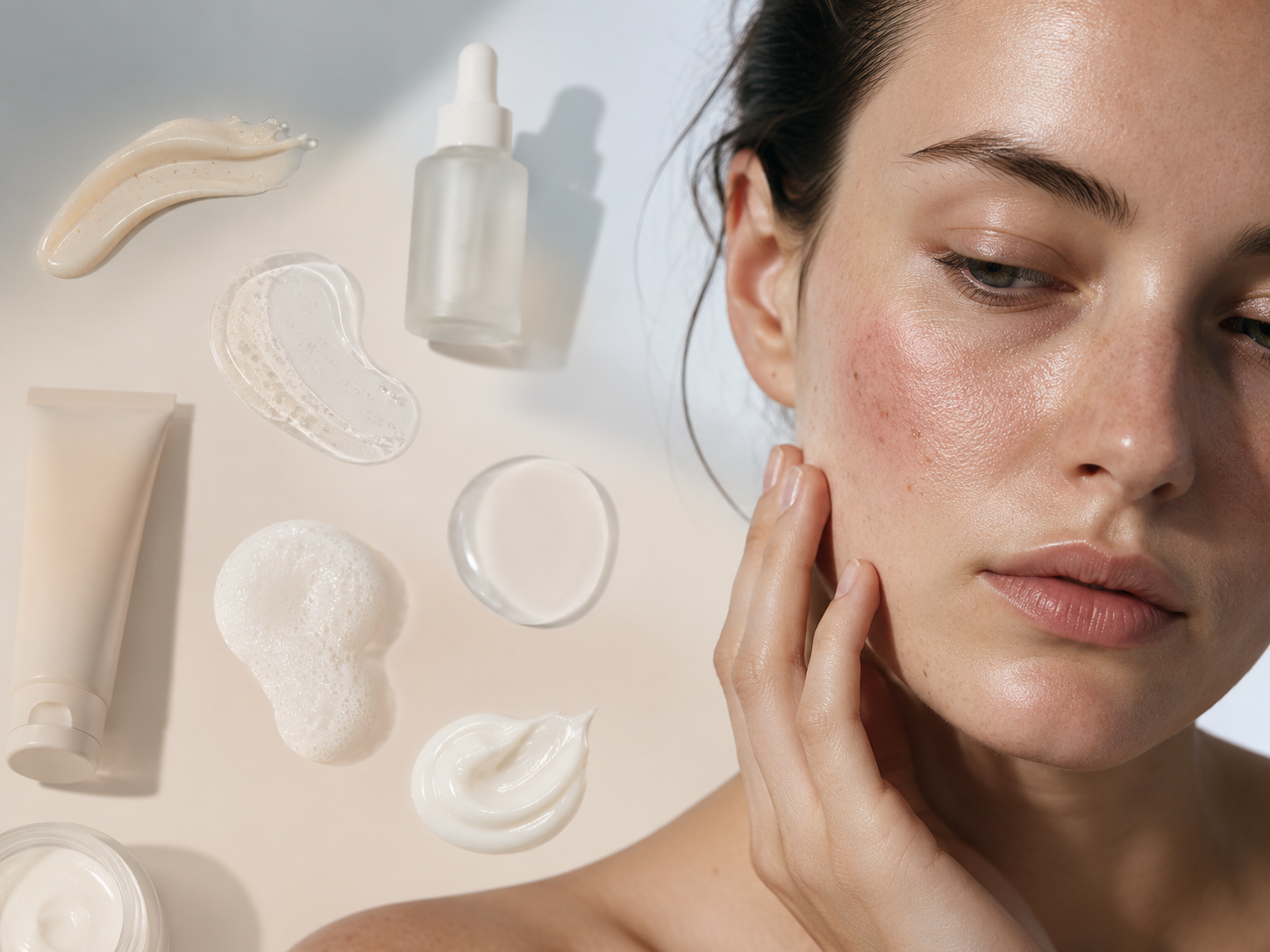
Signs of Damaged Skin Barrier: tightness, burning, redness, flaking, sensitivity, and simple ways to calm your skin routine.
Signs of Damaged Skin Barrier
Your skin barrier is the outer protective layer that helps keep moisture in and irritants out. When that barrier is healthy, your skin usually feels more comfortable, balanced, and less reactive. When it is damaged, your face may feel tight, hot, raw, or easily irritated.
Signs of Damaged Skin Barrier often show up after over-exfoliating, using too many actives, switching products too quickly, washing with harsh cleansers, or pushing through irritation. The skin may look dull, shiny, flaky, red, bumpy, or rough even when you are trying hard to take care of it.
Signs of Damaged Skin Barrier
A helpful clue is how your skin reacts to basic products. If a plain moisturizer suddenly burns or your cleanser makes your face feel stripped, your skin may need repair before it needs more treatment ingredients.
Simple rule: if your skin is burning, stinging, tight, or reacting to products that used to feel fine, pause strong actives and support the barrier first.
Common Signs Your Skin Barrier Is Stressed
Not every dry patch means your barrier is damaged, but certain patterns are worth watching. Signs of Damaged Skin Barrier can feel different from normal dryness because the skin often becomes reactive, uncomfortable, and harder to calm.
Burning or Stinging
Moisturizer, sunscreen, or gentle products may sting when your skin barrier is irritated.
Tight but Shiny Skin
Your face may look oily or shiny while still feeling tight, dry, or uncomfortable.
Redness and Heat
The skin may look flushed, feel warm, or react faster than usual after cleansing.
Flaking or Rough Texture
Makeup may cling to patches, and skincare may not sit smoothly on the skin.
Why Your Skin Barrier Gets Damaged
Your barrier can become stressed when the routine is too aggressive for your skin. Exfoliating acids, retinol, benzoyl peroxide, strong vitamin C formulas, scrubs, fragrance, harsh cleansers, and frequent product changes can all contribute when used too often or layered too quickly.
Signs of Damaged Skin Barrier often happen when someone tries to fix every concern at once. Acne, dark spots, texture, pores, wrinkles, and dullness may all feel urgent, but the skin usually does better when you choose one main goal and build slowly.
Another common issue is skipping moisturizer because the skin is oily. Oily skin can still become dehydrated and irritated. If the skin barrier is not supported, active ingredients may become harder to tolerate.
For more help with ingredient stacking, visit the ingredient compatibility guide and the beginners guide to active ingredients.
Damaged Barrier vs Purging
It is easy to confuse barrier damage with purging, especially when breakouts appear after starting a new active ingredient. Purging usually happens in areas where you already tend to break out and is linked to ingredients that increase skin turnover. Barrier damage feels more like irritation, burning, tightness, redness, and sensitivity.
Signs of Damaged Skin Barrier may include breakouts, but the breakouts often come with discomfort. Your face may sting from moisturizer, feel hot after cleansing, or become flaky around the nose, mouth, or cheeks. That is different from a calm breakout pattern.
If your skin is both breaking out and peeling, slow down. Do not keep adding actives because you think your skin needs to “push through.” A damaged barrier can make acne and texture look worse, not better.
Chele tip: if your moisturizer burns, treat that as a warning sign. Go back to gentle cleanser, moisturizer, and sunscreen before adding more treatment steps.
Signs of Damaged Skin Barrier From Over-Exfoliation
Over-exfoliation is one of the fastest ways to irritate the skin barrier. Acids can be helpful when used correctly, but using them too often can leave skin raw, shiny, sensitive, and flaky. Scrubs can also make things worse if the skin is already irritated.
Signs of Damaged Skin Barrier from over-exfoliation may include a waxy shine, sudden rough patches, stinging, redness, and products that feel stronger than they used to. Makeup may separate or grab onto texture because the surface of the skin is not calm.
If this happens, pause exfoliating acids and scrubs. Focus on a plain moisturizer, gentle cleanser, sunscreen, and barrier-supporting ingredients. Once your skin feels normal again, exfoliation can be reintroduced slowly if your skin needs it.
For more exfoliant education, visit AHA, BHA, and PHA differences or salicylic acid.
Signs of Damaged Skin Barrier From Retinol
Retinol can be useful, but it can also irritate the skin when started too quickly. Using retinol every night at the beginning, applying too much, layering it with acids, or skipping moisturizer can all make the barrier feel stressed.
Signs of Damaged Skin Barrier from retinol may include peeling around the mouth, stinging when applying moisturizer, redness, dryness that will not calm down, or skin that feels raw after cleansing. Retinol should not make your face feel like it is burning.
If retinol is causing irritation, reduce frequency or pause it while the skin calms. When you restart, use a small amount, apply it to dry skin, moisturize well, and keep the routine simple on retinol nights.
For more help, read the beginners guide to retinol and types of retinoids.
How to Calm a Damaged Skin Barrier
The first step is to simplify. A barrier-repair routine should feel boring in the best way. You do not need multiple serums, exfoliants, masks, scrubs, retinol, and spot treatments while the skin is irritated.
Signs of Damaged Skin Barrier usually improve faster when you remove the extra stress. Use a gentle cleanser, a supportive moisturizer, and sunscreen in the morning. If the skin is very irritated, skip unnecessary actives until the burning, tightness, and flaking calm down.
Look for ingredients that support comfort and hydration, such as ceramides, glycerin, panthenol, squalane, hyaluronic acid, and colloidal oatmeal. These are not boring ingredients. They help your skin feel stable enough to tolerate treatment ingredients later.
Start with the barrier repair guide, then build back slowly when your skin feels calm.
Best Ingredients for Barrier Support
Barrier-supporting ingredients help make irritated skin feel more comfortable. They do not need to be trendy or complicated. In many routines, the most helpful step is a moisturizer that actually supports the skin instead of just feeling nice for a few minutes.
Ceramides
Ceramides help support the skin barrier and are useful when skin feels dry, stressed, or easily irritated.
Panthenol
Panthenol can help skin feel calmer and more comfortable when the routine has become too aggressive.
Glycerin
Glycerin helps pull water into the skin and supports hydration when paired with moisturizer.
Squalane
Squalane can add lightweight moisture and comfort without feeling too heavy for many skin types.
Helpful ingredient pages include what are ceramides, panthenol vitamin B5, what is glycerin, and what is squalane.
What to Avoid While Your Barrier Is Healing
When your skin is irritated, the goal is to remove friction and unnecessary stress. That means avoiding strong active layering, harsh scrubs, daily exfoliation, fragrance-heavy products, and routines that change every few days.
Signs of Damaged Skin Barrier can get worse when you try to fix irritation with even more treatment products. If the skin is already inflamed, adding stronger actives may increase redness, burning, peeling, and breakouts.
- Pause exfoliating acids until the skin feels calm.
- Pause retinol if the skin is burning, peeling, or raw.
- Avoid scrubs and rough cleansing tools.
- Do not test several new products at once.
- Keep sunscreen in the morning routine.
- Use moisturizer even if your skin is oily.
When to Get Professional Help
Some irritation can improve with a simpler routine, but not every skin issue should be handled alone. If your skin is swollen, oozing, severely painful, cracking, bleeding, or not improving after simplifying your routine, it is smart to check with a dermatologist or qualified medical provider.
Signs of Damaged Skin Barrier can overlap with eczema, rosacea, allergic reactions, acne, dermatitis, and other skin conditions. If you are not sure what is happening, professional guidance can help you avoid making it worse.
The American Academy of Dermatology has public skin health information and dermatologist-reviewed guidance. You can visit the American Academy of Dermatology for general skin education.
Signs of Damaged Skin Barrier: Quick Questions
These quick questions can help you decide whether your skin needs a reset before you add more products.
Can Signs of Damaged Skin Barrier show up suddenly?
Yes. Skin can become reactive after a new product, too much exfoliation, retinol overuse, harsh cleansing, weather changes, or stacking too many actives at once.
Do Signs of Damaged Skin Barrier mean I should stop all skincare?
No. Usually the better choice is to simplify, not quit everything. Keep gentle cleanser, moisturizer, and sunscreen while you pause the stronger treatment steps.
How long do Signs of Damaged Skin Barrier take to calm down?
It depends on how irritated the skin is and what caused the damage. Many people need consistency, gentle products, and time before the skin feels normal again.
Simple Barrier Reset Checklist
Use this checklist when your skin feels irritated, tight, reactive, or uncomfortable.
- Use a gentle cleanser that does not leave skin tight.
- Apply a barrier-supporting moisturizer.
- Wear sunscreen every morning.
- Pause exfoliating acids if your skin stings or flakes.
- Pause retinol if your skin is raw or burning.
- Avoid scrubs, harsh tools, and too many new products.
- Restart actives slowly only after your skin feels calm.
Signs of Damaged Skin Barrier are your skin’s way of asking for a simpler routine. Once your skin feels steady again, you can rebuild with fewer products, better timing, and more barrier support.
Start With Barrier Support
Signs of Damaged Skin Barrier can feel frustrating, but they are also a helpful warning. Simplify your routine, pause strong actives, support your skin with moisturizer, and use sunscreen every morning before adding more treatment steps.