
Sensitive skin can sting, burn, flush, itch, feel tight, or react to products that seem gentle for everyone else, which is why this skin type needs a slower and calmer skincare routine.
Sensitive Skin – Simple Skincare Guide for Reactive Skin
This guide explains common signs of sensitivity, how to build a gentler routine, what ingredients may help, and when redness or reactions should be checked instead of treated with more products.
Quick answer: Sensitive skin usually does best with fewer products, gentle cleansing, barrier support, sunscreen, patch testing, and slow introduction of active ingredients.
Sensitive Skin Signs to Watch For
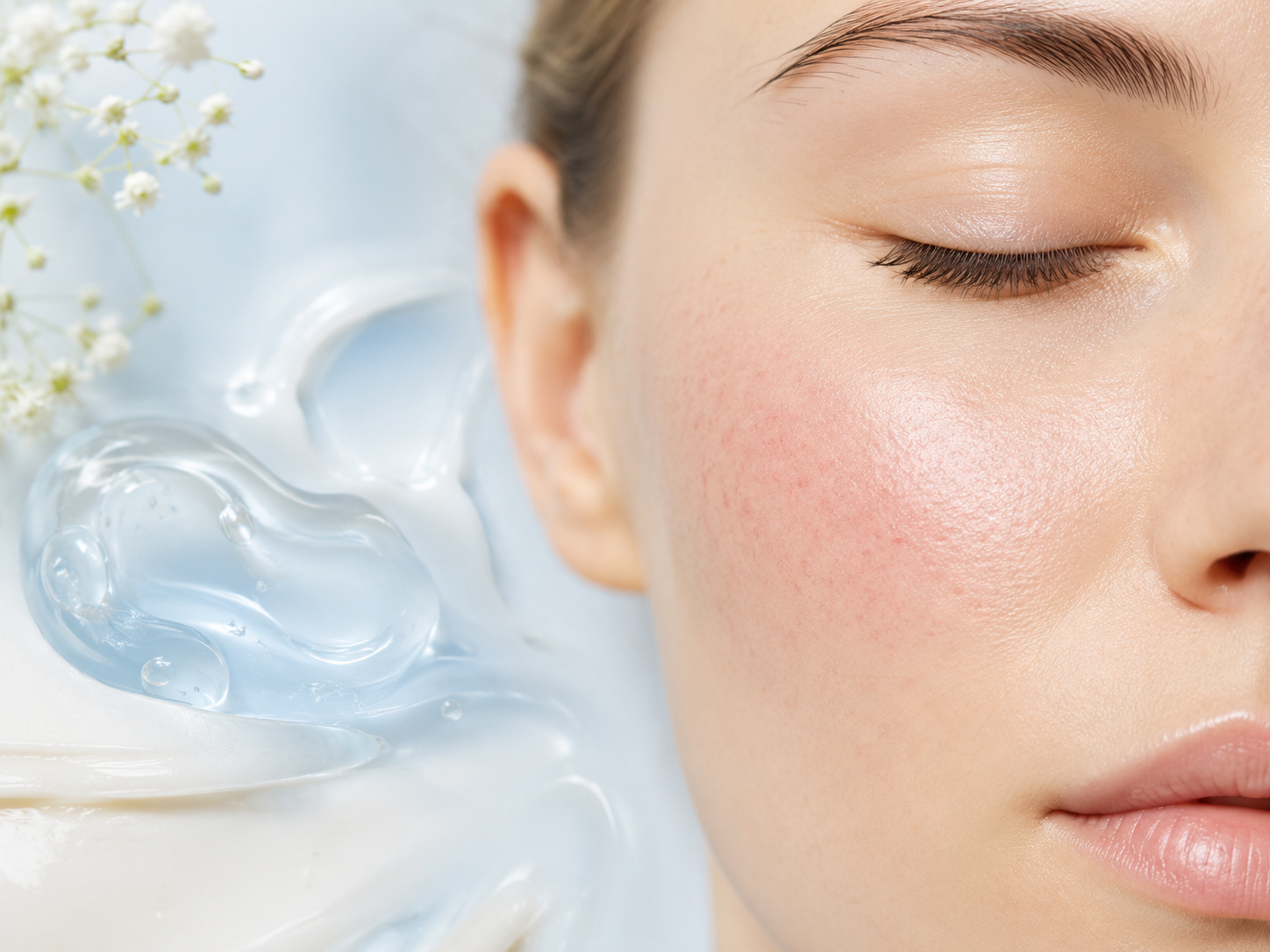
Sensitive skin is not always easy to define because it can look different from person to person. Some people flush quickly. Some feel stinging after moisturizer. Some react to fragrance, exfoliating acids, retinoids, sunscreen, weather, heat, or even a cleanser that other people love.
The main clue is reactivity. If your skin regularly burns, stings, itches, turns red, feels tight, or becomes uncomfortable after products, your barrier may be stressed or your skin may be naturally reactive. That does not mean you can never use active ingredients. It means your routine needs to move slower.
It is also important to separate temporary sensitivity from a medical skin condition. Redness, rashy patches, swelling, hives, oozing, blistering, or painful reactions should not be treated like normal skincare adjustment.
Stinging
Products may feel prickly, hot, or uncomfortable after application.
Redness
The skin may flush easily or stay red after cleansing or treatments.
Tightness
The skin may feel stretched, dry, or uncomfortable even after moisturizer.
Itching
Itching can happen from dryness, irritation, allergy, or barrier stress.
Burning
Burning is a sign to pause and simplify, not push harder.
Sudden reactions
Products that used to work may start bothering a damaged barrier.
Why Sensitive Skin Gets Worse
Sensitive skin often gets worse when the routine becomes too crowded. A person may start with one concern, then add retinol, exfoliating acids, vitamin C, acne treatments, brightening serums, masks, and new sunscreens all at once. The skin cannot always handle that much change.
A damaged barrier is one of the biggest reasons sensitivity increases. When the barrier is stressed, the skin may lose moisture more easily and allow irritants to bother it more quickly. That can make ordinary products feel uncomfortable.
Weather can also matter. Cold air, dry indoor heat, wind, sun exposure, hot showers, and sweating can all make reactive skin feel more irritated. Even makeup or sunscreen removal can become a problem if cleansing is too harsh.
What makes it worse
Too many actives, harsh cleansing, fragrance-heavy products, hot water, scrubs, over-exfoliation, and repeatedly testing products on irritated skin.
What usually helps
Gentle cleansing, simple moisturizer, daily sunscreen, fewer products, patch testing, and barrier-support ingredients used consistently.
Sensitive Skin Morning Routine
A morning routine for sensitive skin should be simple and protective. The goal is not to layer every calming product you own. The goal is to keep the skin comfortable and protected from UV exposure.
Morning Goal
Cleanse gently, moisturize if needed, and protect the skin with sunscreen.
- Cleanse lightly or rinse: Some reactive skin does better with a gentle rinse in the morning instead of a full cleanse.
- Use a simple support step: A calming serum is optional, not required.
- Moisturize: Choose a formula that leaves skin comfortable without stinging.
- Apply sunscreen: Use a sunscreen your skin tolerates and that you will wear consistently.
If sunscreen stings, the formula may not be the right match. That does not mean you should skip sunscreen completely. It means you may need a different texture or formula.
Sensitive Skin Night Routine
A night routine for sensitive skin should focus on removing the day without stripping the barrier. If you wear sunscreen or makeup, cleansing matters, but the cleanser should not leave your skin tight or squeaky.
Night Goal
Remove buildup, calm the routine, and support the barrier overnight.
- Remove makeup or sunscreen gently: Avoid aggressive rubbing.
- Cleanse: Use a gentle cleanser that does not leave your face tight.
- Skip actives if irritated: Do not use acids or retinoids on skin that is already burning.
- Moisturize: Use a barrier-supporting moisturizer that feels comfortable.
Recovery nights can be very helpful. A recovery night means no exfoliating acids, no retinoid, no harsh acne treatment, and no new experiment. Just gentle cleansing and moisturizer.
Ingredients Sensitive Skin May Like
Sensitive skin can still benefit from helpful ingredients, but the full formula matters. A product can contain one calming ingredient and still be irritating if the rest of the formula is too strong for your skin.
Look for ingredients that support hydration, comfort, and barrier health. Introduce one new product at a time so you can tell what your skin actually tolerates.
Panthenol
Often used for comfort and barrier support in gentle skincare routines.
Ceramides
Helpful in moisturizers that support the skin barrier and reduce dryness-related discomfort.
Colloidal oatmeal
Often used in products for dry, itchy, or irritated-feeling skin.
Centella Asiatica
Common in calming-looking skincare formulas and barrier-focused routines.
Glycerin
A classic humectant that helps support hydration without needing a trendy label.
Squalane
A lightweight emollient that may help soften dryness without feeling too heavy for some skin types.
Ingredients and Habits to Use Carefully
Having sensitive skin does not mean you can never use retinoids, acids, vitamin C, or acne treatments. It means you need to respect your skin’s tolerance. Strong ingredients should be introduced slowly and not all at once.
Retinoids may need the moisturizer sandwich method. Exfoliating acids may need to be used less often. Benzoyl peroxide may be too drying for some reactive skin. Vitamin C can sting depending on the formula. Fragrance can be a problem for some people, especially if the skin is already irritated.
- Introduce one active ingredient at a time.
- Use strong ingredients less often at first.
- Do not apply retinoids to damp skin if you are reactive.
- Pause exfoliation when skin is burning, peeling, or stinging.
- Patch test when trying a new product.
- Do not keep using a product that causes swelling, hives, or severe burning.
When Sensitive Skin Needs Medical Help
Sometimes sensitive skin is not just sensitive. Redness, itching, burning, swelling, rashy patches, hives, blistering, oozing, infection signs, or pain can point to something that needs professional care.
Skincare can support a calm barrier, but it cannot diagnose rosacea, eczema, allergic reactions, infections, hives, contact dermatitis, or other conditions. If symptoms keep coming back or get worse, it is better to get guidance instead of buying more products.
Do not keep testing products on skin that is clearly reacting. Stop the suspicious product, simplify the routine, and seek help if the reaction is strong or persistent.
Do not ignore: swelling, hives, trouble breathing, pus, severe pain, red streaking, blistering, or a fast-spreading rash.
FAQ About Sensitive Skin
What is sensitive skin?
Sensitive skin is skin that reacts easily with stinging, burning, itching, redness, tightness, or discomfort. It can be naturally reactive or temporarily stressed from barrier damage.
Can sensitive skin use retinol?
Some reactive skin can use retinol, but it should be introduced slowly. Start low, use it less often, moisturize well, and pause if your skin burns or peels badly.
Should sensitive skin avoid all active ingredients?
No. The key is using active ingredients carefully. One active at a time is usually safer than stacking several strong products in one routine.
What is the best routine for sensitive skin?
The best routine is usually gentle cleanser, moisturizer, sunscreen, and one optional support product. Keep it simple until your skin feels stable.
Final Thoughts on Sensitive Skin
Sensitive skin needs a routine that respects the barrier. That usually means fewer products, gentle cleansing, comfortable moisturizer, sunscreen, patch testing, and slow changes.
The goal is not to avoid every ingredient forever. The goal is to build tolerance carefully and stop pushing your skin when it is clearly overwhelmed. Burning, itching, swelling, and strong reactions are not signs to keep going harder.
If you are caring for sensitive skin, start simple, keep your basics steady, and add new products one at a time. A calm routine is not boring when it helps your skin feel safer and more comfortable.
This page is for general skincare education only. It is not medical advice. If your skin is painful, swollen, infected-looking, blistering, changing suddenly, or reacting strongly, contact a qualified medical professional.