
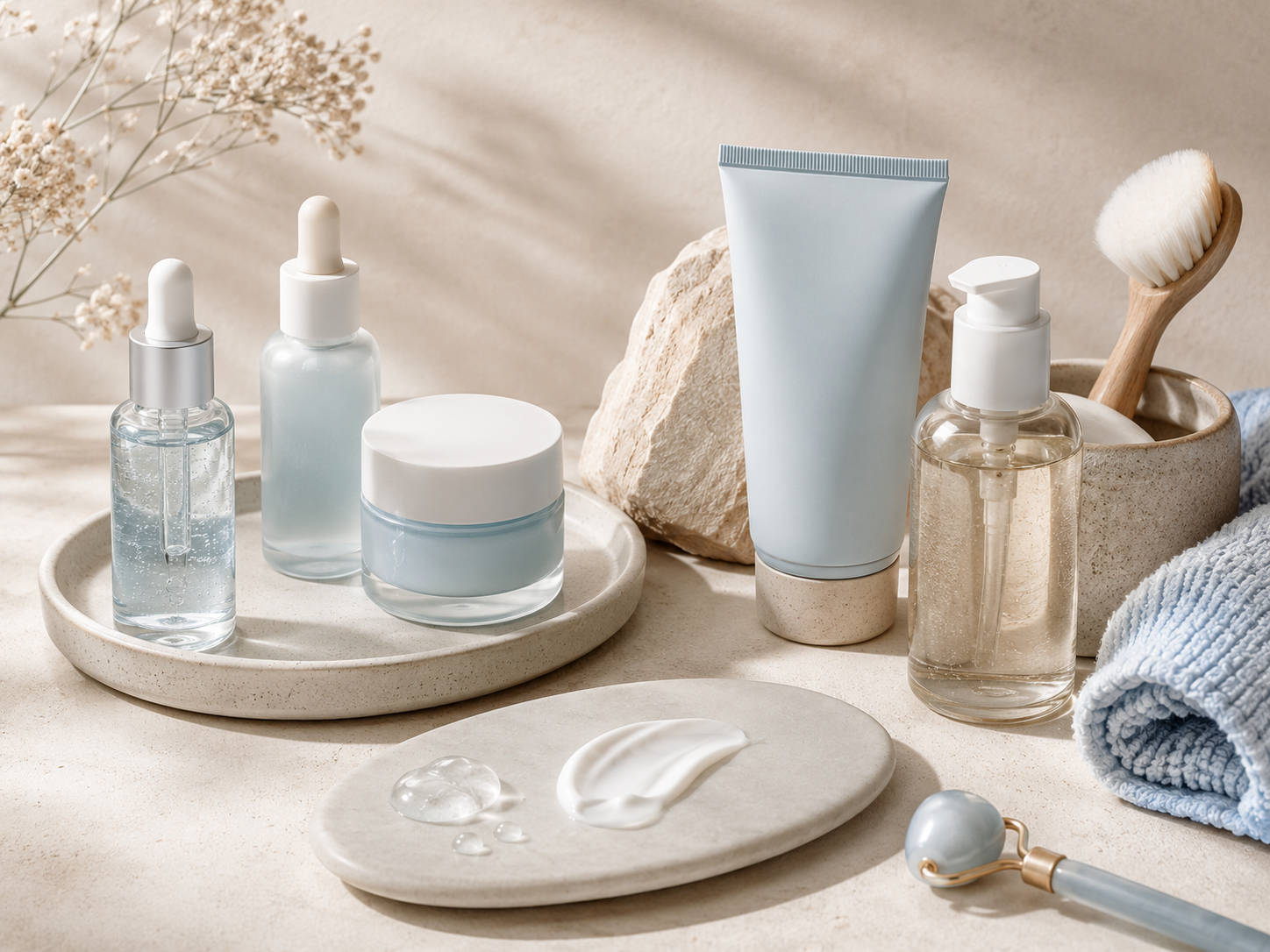
Skincare tips that actually work are usually simple, boring, and consistent: protect your skin from the sun, cleanse gently, moisturize properly, repair your barrier, and stop changing everything at once.
Skincare Tips That Actually Work
This guide skips the hype and focuses on practical skincare habits that help real routines feel calmer, easier, and more effective over time.
Quick truth: Skincare tips that actually work are not always dramatic. Most skin improves from consistency, sunscreen, barrier care, and choosing products that match your skin type.
Skincare Tips That Actually Work Start With Consistency
Skincare tips that actually work are not always the loudest tips on social media. A lot of effective skincare is quiet. It is the cleanser that does not strip your face, the moisturizer you use every day, the sunscreen you apply even when you are not going to the beach, and the routine you can repeat without irritating your skin.
The biggest mistake is thinking skincare has to feel extreme to work. Burning, peeling, tightness, and constant irritation are not signs that your routine is automatically working. Sometimes they are signs that your routine is too aggressive.
The best tips help your skin become more stable, not more confused. That means fewer random changes, better basics, and targeted ingredients added slowly. If your skin barrier is stressed, even expensive products can feel wrong.
7 Skincare Tips That Actually Work
Use these practical rules as a routine reset. They are simple, but they solve a lot of beginner skincare problems.
Wear sunscreen every morning
Sunscreen is one of the most important skincare tips that actually work because UV exposure can worsen dark spots, redness, wrinkles, uneven tone, and visible skin aging.
Use a cleanser that does not leave skin tight
Your cleanser should clean without making your face feel stripped, squeaky, itchy, or uncomfortable. If your skin feels tight right after washing, your cleanser may be part of the problem.
Moisturize based on your skin type
Dry skin may need richer comfort. Oily skin may need a lighter gel-cream. Combination skin may need flexible layering. Moisturizer is not one-size-fits-all.
Repair your barrier before adding strong actives
If your skin is burning, stinging, itching, or reacting to everything, pause strong actives and focus on gentle basics first.
Add one new product at a time
When you add several new products at once, you cannot tell which one helped or which one caused irritation. Slow changes make your routine easier to troubleshoot.
Choose ingredients for the concern, not the trend
Acne, dark spots, wrinkles, dryness, redness, and sensitivity need different strategies. A product being popular does not mean it matches your skin.
Stop chasing instant results
Many skin concerns take time. Dark spots, texture, acne, dryness, and barrier stress usually need consistency, not daily product switching.
Myth vs Fact: Skincare Tips That Actually Work
Skincare can feel confusing because myths spread faster than boring truth. This section separates the hype from the habits that actually help most routines.
Myth: Burning means it is working
Burning can mean irritation, barrier stress, or a product your skin does not tolerate.
Fact: Comfortable skin is a good sign
A routine can work without burning. Healthy progress often feels calm, steady, and boring.
Myth: Oily skin does not need moisturizer
Skipping moisturizer can leave oily skin dehydrated, tight, or more reactive.
Fact: Texture matters
Oily skin may need a lighter moisturizer, not no moisturizer at all.
Myth: More actives mean faster results
Too many actives can damage the barrier and make skin look worse.
Fact: Slow layering works better
One targeted active used consistently is often better than five irritating products.
Tip 1: Sunscreen Is the Skincare Step People Underrate
Daily sunscreen is one of the skincare tips that actually work because it protects your skin from UV exposure. UV exposure can make dark spots darker, redness worse, and wrinkles more noticeable over time.
The best sunscreen is the one you will actually wear. Oily skin may prefer a lighter finish. Dry skin may prefer a more moisturizing formula. Combination skin may need something balanced. If you hate the texture, you will not use it consistently.
Sunscreen also helps your other skincare products make more sense. Brightening products, retinoids, and antioxidant serums are all less useful if the skin keeps getting unprotected UV exposure every day.
Tip 2: Gentle Cleansing Works Better Than Stripping
A gentle cleanser is one of the easiest skincare tips that actually work to overlook. People often think the skin has to feel squeaky-clean after washing, but that tight feeling can mean the cleanser is stripping too much.
Dry skin usually needs a cleanser that protects comfort. Oily skin still should not feel painfully tight. Combination skin needs something that cleans without punishing the dry areas. Sensitive skin may need an even gentler formula.
If your moisturizer never seems to work, your cleanser may be the problem. A harsh cleanser can make your moisturizer fight an uphill battle every day.
Tip 3: Barrier Care Comes Before Strong Treatments
Barrier care is one of the skincare tips that actually work because a stressed barrier makes everything harder. If your skin burns, stings, itches, peels, or reacts to products that used to feel fine, your barrier may need support.
Strong ingredients like retinoids, exfoliating acids, benzoyl peroxide, and vitamin C can help in the right routine. But if your skin is already overwhelmed, adding more strong products can make the situation worse.
Barrier care usually means gentle cleanser, moisturizer, sunscreen, and fewer irritants. Ingredients like glycerin, panthenol, ceramides, squalane, colloidal oatmeal, and Centella Asiatica may help depending on the formula.
Tip 4: Match the Product to the Skin Concern
Another one of the skincare tips that actually work is choosing products by concern instead of buying random trends. Acne, dark spots, wrinkles, redness, dryness, and sensitivity all need different strategies.
For acne, you may need ingredients like salicylic acid, benzoyl peroxide, adapalene, or azelaic acid depending on the breakout type. For dark spots, sunscreen and brightening support matter. For wrinkles, sunscreen, moisturizers, retinoids, and antioxidants can help the look of skin over time.
The problem is not always that a product is bad. Sometimes it is solving a problem you do not actually have, or it is too strong for your current barrier.
Acne
Look for acne-focused ingredients, but do not start everything at once.
Dark spots
Start with sunscreen, then add brightening support carefully.
Redness
Check for irritation, barrier stress, allergy, weather, or skin conditions.
Wrinkles
Use sunscreen, moisturizer, and proven ingredients with realistic expectations.
Tip 5: Stop Changing Everything at Once
One of the most practical skincare tips that actually work is to stop changing the whole routine at one time. If you add a cleanser, toner, serum, moisturizer, sunscreen, retinoid, and exfoliant in the same week, your skin may react and you will not know why.
Introduce one product at a time when possible. Watch how your skin responds. If irritation happens, you will have a better idea of what caused it. This matters especially for sensitive skin, acne-prone skin, and anyone using strong active ingredients.
Slow skincare is not lazy skincare. It is smart skincare. It helps you avoid wasting money and makes it much easier to build a routine that lasts.
Routine reset: When your skin is confused, go back to cleanser, moisturizer, sunscreen, and one targeted product. Then rebuild slowly.
Skincare Tips That Actually Work for Beginners
Skincare tips that actually work for beginners should make the routine easier, not harder. Start with your skin type. Then choose the basic products. After that, add one ingredient for one concern.
A beginner morning routine can be cleanser or rinse, moisturizer if needed, and sunscreen. A beginner night routine can be cleanser and moisturizer. A treatment product can be added once the basics are steady.
If your skin is already irritated, do not start with retinol, acid exfoliants, and acne treatments all at once. Start with calming the skin first.
- Begin with cleanser, moisturizer, and sunscreen.
- Choose products based on skin type and concern.
- Add one new product at a time.
- Use sunscreen every morning.
- Do not force products that burn or irritate your skin.
- Give products time before deciding they do not work.
FAQ About Skincare Tips That Actually Work
What are the best skincare tips that actually work?
The best skincare tips that actually work are daily sunscreen, gentle cleansing, moisturizer that fits your skin type, barrier support, slow product changes, and targeted ingredients chosen for your actual concern.
Do expensive products work better?
Not always. A product should be judged by formula, texture, tolerance, and whether it fits your skin need. Expensive does not automatically mean better.
How long should skincare take to work?
It depends on the concern. Dryness may feel better quickly. Acne, dark spots, wrinkles, and barrier repair usually take more time and consistency.
Should I use more products for faster results?
No. More products can create irritation. A focused routine is often better than a crowded routine.
Final Thoughts on Skincare Tips That Actually Work
Skincare tips that actually work are usually simple because skin needs consistency more than chaos. Daily sunscreen, gentle cleansing, moisturizer, barrier support, and targeted ingredients can do more than a shelf full of random products.
The goal is not to chase every trend. The goal is to understand your skin, protect your barrier, and choose products that solve the right problem. If your routine keeps making your skin burn, sting, peel, itch, or break out, it may be time to simplify.
Start with the basics, add one product at a time, and give your skin a chance to show you what actually helps. That is the kind of skincare advice that holds up long after the trends change.
This page is for general skincare education only. It is not medical advice. If your skin is painful, swollen, infected-looking, changing suddenly, or reacting strongly, contact a qualified medical professional.