
Colloidal oatmeal is a soothing skincare ingredient often used for dry, itchy, sensitive, irritated, or barrier-stressed skin.
Colloidal Oatmeal – Benefits for Dry, Itchy, Sensitive Skin
This guide explains why the ingredient is so common in comfort-focused skincare, how it supports dry and reactive skin, and how to use it in a simple routine.
What Is Colloidal Oatmeal?
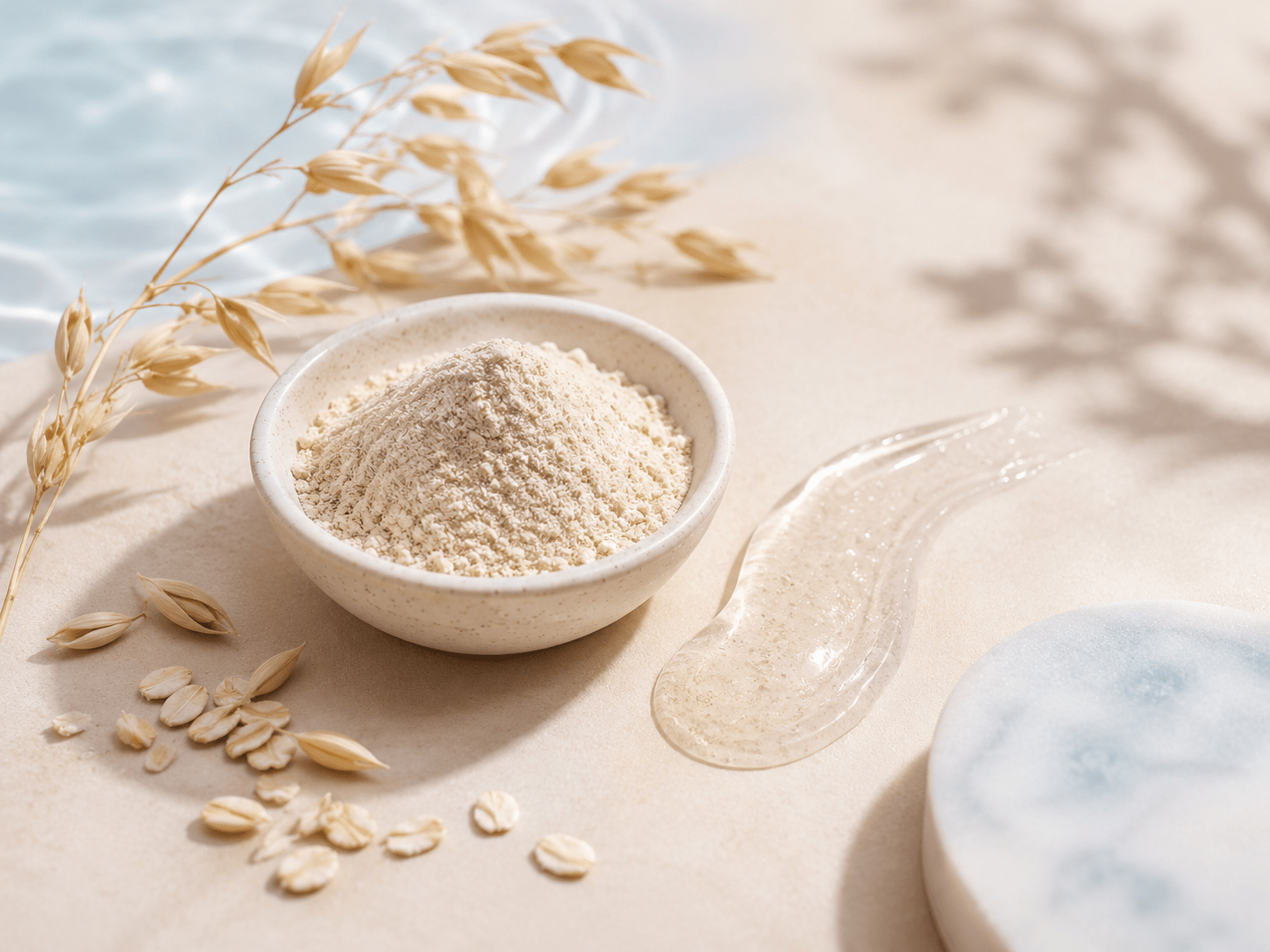
Colloidal oatmeal is finely ground oatmeal that is processed so it can disperse more evenly in skincare products. It is often used in creams, lotions, bath treatments, cleansers, masks, and soothing products made for dry or sensitive skin.
The reason this ingredient is so loved is simple: it helps skin feel more comfortable. When skin is itchy, rough, tight, or irritated, the goal is usually not to add a harsh treatment. The goal is to calm the routine down and support the barrier.
Colloidal oatmeal is not an exfoliating scrub, even though the word oatmeal can make people think of texture. In skincare, it is usually used for soothing and comfort, not for physically rubbing the skin. That matters because irritated skin often gets worse when people scrub it.
It also has a long history in comfort-focused skin care because it is simple and familiar. Many people first learn about oatmeal baths for itchy body skin, but modern skincare uses this ingredient in more polished formulas that are easier to apply, less messy, and better suited for daily routines.
The important thing is to understand what role it plays. This ingredient is not trying to brighten dark spots, unclog pores, or speed up skin turnover. It belongs in the calming and barrier-support category, which is exactly where many irritated routines need help.
Colloidal Oatmeal Benefits for Skin
Colloidal oatmeal is best known for helping dry, itchy, and sensitive skin feel calmer. It is often used when the skin barrier feels stressed or when the skin needs a break from stronger active ingredients.
Comfort for Itchy Skin
It can help skin feel less uncomfortable when dryness or irritation makes the skin feel itchy or tight.
Support for Dry Skin
Dry skin often needs ingredients that make the routine feel more protective, soft, and comfortable.
Gentle Barrier Care
When the barrier is stressed, a soothing ingredient can be more useful than adding another active treatment.
Sensitive Skin Support
Many sensitive-skin formulas use this ingredient because it fits well into routines focused on calmness.
The biggest benefit is that it helps shift the routine away from constant correction and back toward comfort. If your skin is already inflamed-looking, itchy, rough, or reactive, another exfoliant may not be the smartest first move. A soothing ingredient gives your routine a different purpose: to help the skin feel safe and supported again.
This can be especially helpful for people who keep buying stronger products because their skin “is not behaving,” when the real problem may be that the barrier is exhausted. A calmer routine does not mean you are doing nothing. It means you are giving the skin fewer reasons to stay irritated.
Colloidal Oatmeal for Dry, Itchy, Sensitive Skin
Dry, itchy, and sensitive skin often needs fewer triggers and more support. That is why this ingredient makes sense in routines where the skin feels uncomfortable instead of just dull or congested.
If your skin is dry, the goal is to reduce the tight feeling and help the surface feel softer. If your skin is itchy, the goal is to stop doing things that make the itch worse. If your skin is sensitive, the goal is to use products that are less likely to create a reaction.
Colloidal oatmeal fits into that kind of routine because it is not asking the skin to peel, purge, or tolerate a strong active. It is a comfort ingredient. That may sound simple, but simple is often exactly what sensitive skin needs.
For facial skin, use it in a product that is made for the face and does not feel too heavy. For body skin, you may prefer a richer cream or lotion. The right texture depends on the area, your skin type, and whether the product feels comfortable enough to use consistently.
Who Should Use Colloidal Oatmeal?
Colloidal oatmeal can be helpful for people with dry skin, sensitive skin, itchy skin, or skin that feels irritated after using too many active products. It is especially useful when your skin feels like it needs comfort more than correction.
If your face feels tight after cleansing, your skin looks rough, or your moisturizer does not seem to calm the discomfort, a product with this ingredient may be worth considering. It can also be helpful for body skin that feels dry or itchy.
People with oily skin may not need it every day, but oily skin can still become irritated or barrier-damaged. If your skin is oily but also stings, flakes, or feels tight, the issue may be a stressed barrier rather than a lack of acne treatment.
This ingredient is also useful for people who are trying to simplify. If you have a shelf full of products but your skin keeps getting worse, the answer may not be another trendy active. It may be a boring-looking moisturizer that helps your skin feel normal again.
For mature skin, it can also be helpful because dryness and sensitivity may become more noticeable over time. Skin that once tolerated scrubs, acids, fragrance, or foaming cleansers may become less forgiving. Comfort-focused ingredients can help make a routine feel softer without making it heavy or complicated.
Simple rule: If your skin is itchy, burning, or reacting to everything, colloidal oatmeal belongs in the “calm it down” category, not the “do more” category.
How to Use Colloidal Oatmeal in a Routine
Colloidal oatmeal is usually found in moisturizers, creams, masks, cleansers, and bath products. If it is in a moisturizer or cream, use it as your moisturizing step. If it is in a cleanser, it may help the cleanser feel softer, but rinse-off products usually provide less lasting comfort than leave-on products.
For the face, a simple routine could be gentle cleanser, soothing moisturizer, and sunscreen during the day. At night, you can use cleanser and a comfort-focused moisturizer. If your skin is irritated, avoid adding exfoliating acids, retinoids, or strong acne treatments until the skin settles.
For the body, this ingredient may be helpful in lotions or bath treatments when skin feels dry and itchy. Apply moisturizer soon after bathing while the skin is still slightly damp, then let the product support comfort instead of over-scrubbing the area.
If you are using a face cream, apply it after any lightweight hydrating steps and before sunscreen in the morning. At night, it can be your final moisturizer step. You do not need to layer five calming products together. One good formula can be enough when the rest of the routine is gentle.
If your skin is irritated, keep the routine boring on purpose. Gentle cleanser, moisturizer, and sunscreen may not feel exciting, but that is often exactly what the skin needs. Once the skin feels calmer, you can decide whether active ingredients should come back slowly.
Face Routine
Use a gentle cleanser, a soothing product with colloidal oatmeal, and sunscreen during the day.
Body Routine
Use a lotion or cream after bathing to help dry, itchy body skin feel more comfortable.
Face vs Body Use
Face skin and body skin can both feel dry, itchy, or irritated, but the product texture you choose may be different. The face often does better with lighter creams or lotions that do not feel too greasy. The body may need richer creams, especially on legs, arms, elbows, hands, or areas that get rough quickly.
For the face, choose formulas made for facial skin if you are acne-prone or easily congested. A body cream may feel too heavy on the face, even if it contains helpful soothing ingredients. For the body, richer textures can be useful because body skin often tolerates heavier moisturizers better.
Bath products can be helpful for widespread dryness or itching, but they should not replace moisturizing afterward. Warm water can feel soothing in the moment, but long hot baths may leave the skin drier. Keep water warm instead of hot, pat skin dry gently, and apply moisturizer soon after.
This is also where product format matters. A cleanser with a soothing ingredient may make washing less stripping, but a leave-on cream usually gives longer comfort. If your skin is truly dry or itchy, a leave-on product is usually the more important step.
Can You Pair Colloidal Oatmeal With Other Ingredients?
Colloidal oatmeal pairs well with many barrier-support and hydration ingredients. It works nicely with glycerin, panthenol, ceramides, squalane, hyaluronic acid, niacinamide, and centella asiatica. These combinations are often used in products made for dry or sensitive skin.
It can also be used in a routine that includes active ingredients, but timing matters. If your skin is already irritated, this ingredient may help support comfort, but it does not make overusing actives safe. A damaged barrier usually needs fewer strong products, not more layers.
If you use retinol, exfoliating acids, benzoyl peroxide, or vitamin C, consider using soothing ingredients on recovery nights. That can help your routine feel more balanced and reduce the urge to treat your skin aggressively every night.
It can also pair well with occlusive or richer moisturizing ingredients when the skin is very dry. For example, a soothing moisturizer followed by a small amount of a protective balm on rough areas can help comfort very dry patches. That does not mean you need to slug your entire face, especially if you are acne-prone. It means you can use heavier support only where the skin needs it.
Colloidal Oatmeal for Itchy Skin
Colloidal oatmeal is commonly used when dryness makes skin feel itchy or uncomfortable. It can be helpful in creams, lotions, and bath products because it supports a softer, calmer-feeling skin surface.
Itchy skin can happen for many reasons, including dryness, harsh cleansers, weather changes, fragrance irritation, over-exfoliation, or a compromised barrier. A soothing product may help, but it is also important to remove whatever is making the skin worse.
If your skin is persistently itchy, painful, cracked, bleeding, or rash-like, do not keep trying random products forever. That may need medical guidance. Skincare can support comfort, but it cannot diagnose every cause of itching.
A good routine for itchy-feeling skin should be gentle from start to finish. That means fragrance-free when possible, no harsh scrubs, no hot water, and no constant product switching. When skin is irritated, every new product becomes another possible trigger.
If itchiness shows up mostly after showering, your cleanser, water temperature, or lack of moisturizer afterward may be part of the problem. If itchiness happens after active skincare, the routine may be too strong. The pattern can help you figure out what needs to change.
How to Choose a Product
When choosing a product with this ingredient, think about where you plan to use it. For the face, look for a gentle moisturizer, serum-cream, or calming mask made for sensitive skin. For the body, look for a lotion or cream that feels rich enough to keep dry areas comfortable.
Check the full formula, not only the front label. A product can contain a soothing ingredient and still include fragrance or other ingredients that bother your skin. Sensitive skin usually does better with simpler formulas that focus on moisture, barrier support, and comfort.
Texture matters too. If you hate the feel of a product, you probably will not use it consistently. A good product should fit your actual routine. A cream that works beautifully but feels too greasy for your face might be better used on your hands, neck, or body instead.
Do not assume expensive automatically means better. Many comfort-focused ingredients are not glamorous, but they can be extremely useful. What matters most is whether the product helps your skin feel calmer and whether you can use it consistently without irritation.
Common Mistakes to Avoid
The first mistake is treating oatmeal like a scrub. Physical scrubbing can make irritated skin worse, especially if your barrier is already stressed. Colloidal oatmeal in skincare is meant to be soothing, not rough.
The second mistake is using a soothing product while continuing the habit that caused the irritation. If a cleanser strips your face, an acid is used too often, or fragrance keeps causing redness, comfort ingredients can only do so much.
The third mistake is ignoring the full formula. A product can contain a wonderful soothing ingredient and still include fragrance, essential oils, or textures that your skin dislikes. Sensitive skin needs the whole formula to be gentle.
Another common mistake is expecting one product to fix a routine that is too busy. If you are using several acids, a retinoid, acne treatments, and multiple toners, a soothing cream may help but it cannot fully protect your barrier from constant stress.
- Do not scrub irritated skin with rough oatmeal mixtures.
- Do not keep using harsh actives if your skin is already burning.
- Do not skip moisturizer when your skin feels dry or itchy.
- Do not assume one soothing ingredient fixes every rash or irritation.
- Do not keep switching products every day while trying to calm sensitivity.
Colloidal Oatmeal FAQ
Is colloidal oatmeal good for the face?
Yes, it can be helpful for the face when it is in a product made for facial skin. Choose a gentle formula that fits your skin type, especially if you are acne-prone or easily irritated.
Can oily skin use it?
Oily skin can use comfort ingredients when the skin feels irritated, tight, or barrier-stressed. Choose a lighter product if rich creams feel too heavy.
Can it be used with retinol?
It can be used in a routine with retinol, especially on recovery nights or in a moisturizer. If your skin is peeling or burning, reduce the retinol instead of only adding soothing products.
Is it only for eczema-prone skin?
No. Many people use it for general dryness, itching, sensitivity, and barrier comfort. Skin does not need a diagnosis to benefit from a gentle, supportive routine.
When Should You Be Careful?
Colloidal oatmeal is generally considered gentle, but any ingredient can be a problem for someone. If a product causes burning, swelling, rash-like irritation, or worsening discomfort, stop using it and simplify your routine.
If you have a known oat allergy, be cautious and check with a qualified professional before using oat-based skincare. Also be careful with homemade mixtures, because kitchen ingredients are not the same as a well-formulated skincare product.
For persistent itching, severe irritation, or skin that looks infected, professional guidance matters. For general skin care basics, the American Academy of Dermatology has helpful information at AAD skin care basics.
You should also be careful if the skin is broken, oozing, very painful, or spreading quickly. Those signs are beyond a normal dry-skin routine. A comfort product may feel nice, but it should not delay care when the skin needs medical attention.
Final Thoughts on Colloidal Oatmeal
Colloidal oatmeal is a calm, supportive ingredient for dry, itchy, sensitive, and irritated skin. It is not a trendy active that tries to force fast change. It is useful because it helps a routine feel more comfortable when the skin needs care.
The best way to use it is in a gentle moisturizer, cream, cleanser, or bath product that fits your skin. If your skin barrier is stressed, keep your routine simple and avoid stacking strong treatments until your skin feels normal again.
For people building a barrier-friendly routine, colloidal oatmeal is one of the ingredients worth knowing. It works well with hydration and barrier support ingredients, and it can help remind you that sometimes the best skincare move is to calm the skin down.
If your skin has been through too many active ingredients, too much cleansing, or too many product changes, this kind of ingredient can help you move back toward a routine that feels gentle and steady. That may not sound exciting, but it is often what actually gets the skin looking and feeling better.