Pregnancy Safe Skin and What to Avoid – Simple Skincare Guide
Pregnancy Safe Skin and What to Avoid can feel confusing because many people want to keep caring for acne, dryness, dark spots, and texture while also being extra careful with ingredients.
This guide keeps the routine simple. Pregnancy skincare should focus on gentle cleansing, barrier support, sunscreen, hydration, and avoiding ingredients that are commonly recommended to pause during pregnancy. Always ask your OB-GYN or dermatologist about prescription products or anything you are unsure about.
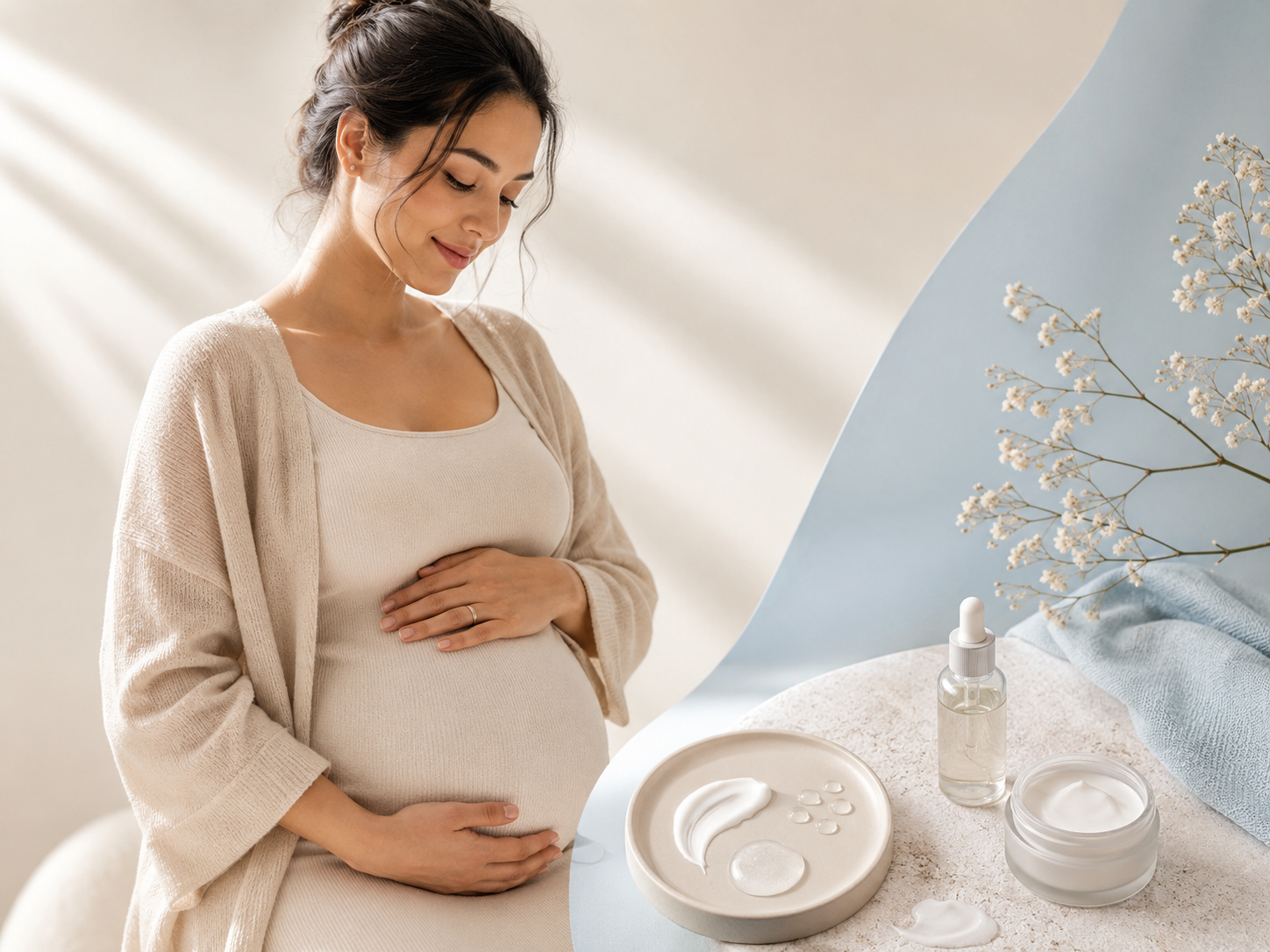
Pregnancy Safe Skin and What to Avoid: gentle skincare swaps, ingredients to pause, barrier support, sunscreen, and simple routine tips.
Pregnancy Safe Skin and What to Avoid
Pregnancy can change the skin in several ways. Some people notice acne, dryness, sensitivity, melasma, dark spots, itching, dullness, or a skin barrier that suddenly feels easier to irritate. A routine that worked before pregnancy may need to become gentler.
Pregnancy Safe Skin and What to Avoid is not about being scared of every product. It is about using a simpler routine, pausing ingredients that are not recommended, and choosing gentle alternatives that support the skin without overcomplicating your routine.
Pregnancy Safe Skin and What to Avoid
The safest approach is to check labels, avoid retinoids, be cautious with strong treatments, and ask your healthcare provider before using prescription acne, anti-aging, or dark spot products during pregnancy.
Simple rule: during pregnancy, keep the routine gentle, avoid retinoids, use sunscreen daily, and ask your provider about any strong treatment product.
Ingredients Commonly Avoided During Pregnancy
The ingredient category most often recommended to avoid during pregnancy is retinoids. This includes prescription retinoids and over-the-counter retinol products. Even though topical absorption may be low, many medical sources still recommend avoiding them during pregnancy out of caution.
Pregnancy Safe Skin and What to Avoid also means being careful with strong pigment treatments, high-strength peels, and prescription acne medications unless your provider says they are appropriate for you.
- Pause retinol and retinoids unless your doctor specifically advises otherwise.
- Avoid oral isotretinoin completely during pregnancy.
- Ask your provider before using hydroquinone or prescription dark spot treatments.
- Avoid strong chemical peels unless approved by your provider.
- Check acne medications with your OB-GYN or dermatologist.
The American College of Obstetricians and Gynecologists notes that topical retinoids are generally recommended to be avoided during pregnancy. You can read their public guidance on skin conditions during pregnancy.
Retinol and Retinoids During Pregnancy
Retinoids are commonly used for acne, texture, fine lines, and anti-aging routines, but they are not the ingredient group to push during pregnancy. This includes retinol, retinal, adapalene, tretinoin, tazarotene, and other vitamin A related skincare treatments.
Pregnancy Safe Skin and What to Avoid should include a clear retinoid pause. If you were using retinol before pregnancy, stop and ask your healthcare provider when it is appropriate to restart after pregnancy or breastfeeding.
Instead of retinoids, focus on a gentle cleanser, moisturizer, sunscreen, and safer supportive ingredients like glycerin, hyaluronic acid, ceramides, panthenol, and azelaic acid if your provider is comfortable with it.
For non-pregnancy retinoid education later, visit beginners guide to retinol and types of retinoids.
Pregnancy Acne Routine Basics
Pregnancy acne can be frustrating because many common acne products may need to be paused or checked first. Do not panic and start layering every spot treatment. A gentle, steady routine is usually the better starting point.
Pregnancy Safe Skin and What to Avoid for acne means avoiding retinoids and asking your provider about benzoyl peroxide, salicylic acid, azelaic acid, or prescription acne options. What is right for one pregnancy may not be right for another.
Gentle Cleanser
Use a cleanser that removes oil and sunscreen without leaving the skin tight, raw, or stripped.
Light Moisturizer
Even acne-prone skin needs barrier support. Choose a texture that does not feel heavy.
Provider-Approved Treatment
Ask before using acne medications, strong acids, or prescription products during pregnancy.
Sunscreen
Sunscreen helps protect against dark marks and uneven tone after breakouts.
Dark Spots and Melasma During Pregnancy
Pregnancy can make discoloration more noticeable for some people. Melasma, sometimes called the mask of pregnancy, can appear as brown or gray-brown patches, often on the cheeks, forehead, upper lip, or jawline.
Pregnancy Safe Skin and What to Avoid matters with dark spots because some brightening treatments are not the best choice during pregnancy. Instead of chasing strong pigment treatments, focus on daily sunscreen, hats, shade, and gentle ingredients your provider approves.
Vitamin C, niacinamide, and azelaic acid may be discussed as gentler options, but every formula is different. If your skin is sensitive or pregnancy has made your barrier reactive, introduce brightening products slowly.
Helpful pages include what is vitamin C, what is niacinamide, and what are dark spots and how to treat them.
Sunscreen During Pregnancy
Sunscreen is one of the most important skincare steps during pregnancy, especially if you are dealing with melasma, dark spots, or uneven tone. It also helps protect your skin barrier and supports the rest of your routine.
Pregnancy Safe Skin and What to Avoid does not mean skipping sun protection. Many people prefer mineral sunscreens with zinc oxide or titanium dioxide during pregnancy, especially if their skin is sensitive or easily irritated.
Choose a sunscreen you can wear daily. If one formula stings your eyes, pills under makeup, or feels too greasy, try a different texture. The best sunscreen is the one you will actually use every morning.
For dermatologist-reviewed sunscreen guidance, the American Academy of Dermatology explains broad-spectrum sunscreen and SPF basics.
Gentle Ingredients That Usually Make Sense
A pregnancy skincare routine does not have to be empty. Many gentle, supportive ingredients can still help dryness, dullness, sensitivity, and barrier comfort. The goal is to choose ingredients that support the skin without acting like aggressive treatments.
Pregnancy Safe Skin and What to Avoid often comes back to the basics: hydration, barrier support, and sun protection. These steps can make the skin look and feel better even while stronger anti-aging ingredients are paused.
Glycerin
A classic humectant that helps skin feel hydrated and less tight.
Hyaluronic Acid
Helps attract water to the skin and can support a plumper, smoother look.
Ceramides
Help support the skin barrier when skin feels dry, irritated, or easily stressed.
Panthenol
Can help skin feel calmer and more comfortable when the barrier feels stressed.
Helpful ingredient pages include what is glycerin, what is hyaluronic acid, and panthenol vitamin B5.
Morning Pregnancy Skincare Routine
A morning routine should be simple, protective, and comfortable. Pregnancy can make skin more sensitive, so there is no need to overdo the steps. Focus on keeping the skin clean, moisturized, and protected from UV exposure.
Pregnancy Safe Skin and What to Avoid in the morning means avoiding retinoids and strong treatments, then using sunscreen as the final step. If your skin feels dry, add hydration and a barrier-supporting moisturizer.
Step 1
Cleanse gently or rinse if your skin does not need a full morning cleanse.
Step 2
Apply moisturizer or a hydrating serum if your skin feels tight, dull, or dry.
Step 3
Finish with sunscreen every morning, especially if dark spots are a concern.
Night Pregnancy Skincare Routine
A night routine should remove sunscreen, makeup, oil, and daily buildup without stripping the skin. This is also a good time to use a moisturizer that supports the barrier.
Pregnancy Safe Skin and What to Avoid at night means skipping retinol and avoiding aggressive active layering. If you need acne, redness, or dark spot help, ask your provider which options are best for your situation.
- Use a gentle cleanser that does not leave skin tight.
- Apply a hydrating serum if your skin needs extra water support.
- Use a barrier-supporting moisturizer.
- Skip retinoids during pregnancy unless your provider gives different guidance.
- Avoid testing multiple new products at the same time.
If your skin is burning, peeling, or reacting to products, simplify even more and focus on barrier repair.
What to Do if Your Skin Gets Sensitive
Pregnancy may make skin feel more sensitive than usual. Products that used to work may suddenly sting, feel too strong, or cause redness. That does not mean your whole routine is ruined. It may just need to be calmer.
Pregnancy Safe Skin and What to Avoid includes avoiding harsh scrubs, strong exfoliation, fragrance-heavy formulas, and too many new products. When your skin is reactive, less is often better.
Use gentle cleanser, moisturizer, and sunscreen for a simple reset. If moisturizer burns, your barrier may be irritated. If acne or discoloration is also happening, handle the sensitivity first before adding more treatment products.
Read signs of damaged skin barrier and barrier repair guide for more help.
Ingredients to Ask Your Provider About
Some ingredients sit in a gray area where guidance can depend on strength, frequency, product type, and your medical history. This is why pregnancy skincare should not rely only on social media lists.
Pregnancy Safe Skin and What to Avoid should include a provider check for prescription treatments, acne medications, strong exfoliating acids, pigment treatments, and anything you are applying over large areas of skin.
- Prescription acne products
- Hydroquinone or strong pigment treatments
- High-strength exfoliating acid products
- Retinoids of any kind
- Medicated body products used over large areas
- Professional peels or cosmetic procedures
When in doubt, bring the product name or ingredient list to your OB-GYN, midwife, or dermatologist.
Pregnancy Safe Skin and What to Avoid: Quick Questions
These quick answers can help you keep your routine calm while you check anything stronger with your provider.
Is Pregnancy Safe Skin and What to Avoid mostly about retinol?
Retinoids are one of the biggest ingredient groups to pause, but the bigger idea is to simplify, protect the skin barrier, use sunscreen, and ask about strong treatments.
Can Pregnancy Safe Skin and What to Avoid include acne care?
Yes, but acne care should be gentle and provider-approved. Avoid retinoids and ask before using prescription or strong acne products.
Can Pregnancy Safe Skin and What to Avoid include dark spot care?
Yes. Sunscreen is the most important step. Gentle brightening ingredients may help, but stronger pigment treatments should be checked with your provider.
Simple Pregnancy Skincare Checklist
Use this checklist when you want a routine that feels safe, simple, and easier to manage.
- Use a gentle cleanser that does not strip the skin.
- Use moisturizer to support the barrier.
- Wear sunscreen every morning.
- Pause retinol and retinoids during pregnancy.
- Ask your provider about prescription acne or pigment treatments.
- Avoid strong peels unless your provider approves them.
- Add only one new product at a time.
- Simplify if your skin becomes reactive.
Pregnancy Safe Skin and What to Avoid is easier when the routine stays calm. Focus on hydration, moisturizer, sunscreen, and provider-approved choices instead of chasing every skin concern at once.
Keep Pregnancy Skincare Calm
Pregnancy Safe Skin and What to Avoid starts with a gentle routine, daily sunscreen, strong barrier support, and pausing ingredients like retinoids. When a product feels questionable, ask your provider before using it.